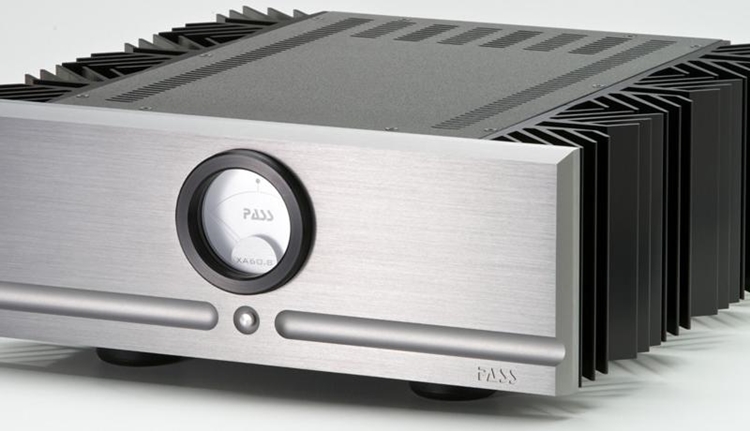
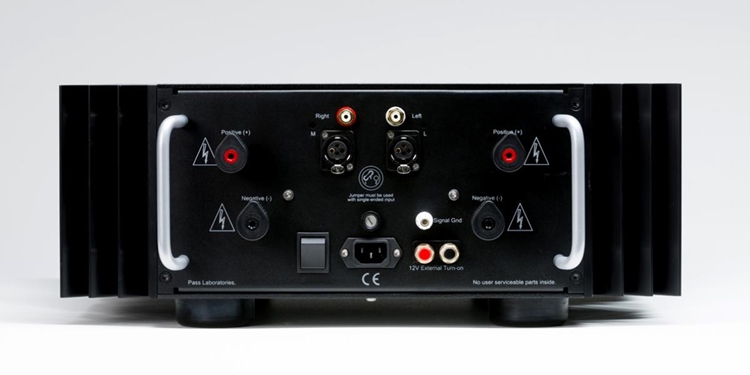
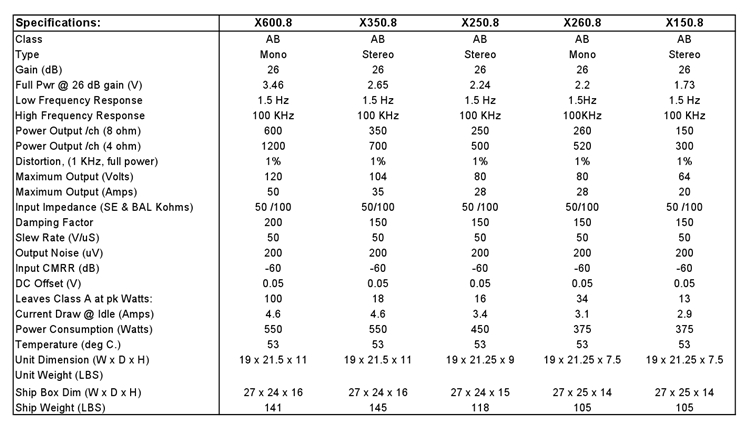
★Pass(패스)★ X150.8 파워앰프
Point 8
For many years there has been considerable faith that if we simply keep improving the measurements of components such as amplifiers then they will sound better. Initially this was truly the case – equipment was sufficiently flawed from an objective standpoint that better measurements matched up with subjective experience.
At some level of objective quality there started to be a disconnect, and some audiophiles began to lose the faith. One of the responses to this was to examine more exotic sources of distortion in the equipment while some others simply worked to continue to reduce the flaws that were already understood. There's no doubt that some real progress resulted from these efforts, and now you can purchase products at reasonable prices which measure far better than the old stuff.
But the disconnect between the customer's perceptions and the measurements persists, and there have been cases of state-of-the-art engineering resulting in economic failure, apparently because people didn't care for the sound.
Well, of course you are dealing with people, and that will complicate any endeavor. The customer wants what the customer wants. I have heard arguments that audiophiles are irrational, that decisions are based on appearance or cost or advertising. Certainly there is plenty of that, and there have been plenty of blind tests that have demonstrated that “audiophiles can't hear the difference”, at least in the context of that test.
But I don't think that's the whole story. My experience is that under the right conditions the customer can often hear the difference, and his observations are not to be ignored.
First, it has to be acknowledged that the science of cognitive perception is still in its infancy, and the ear is not really a microphone and the brain is not a tape recorder. The data we do have on this subject is a little like quantum mechanics – we have to change our view to make sense of the illusions and paradoxes that accompany the interpretation of sensory input.
With regard to amplifiers at least, I think we already have the measurement data in hand. The problem is in our failure to interpret it with respect to human perception.
This puts some emphasis back on listening tests - extensive long-term tests with reliable listeners and familiar equipment and environments. This is not a cheap and easy procedure. Even assuming that the listener(s) really can hear, we still have the vagaries of individual taste, and not a large population of qualified listeners and systems.
In the end, even if we can design around the perceptions of a small qualified listening panel, we are still inevitably aiming at a minority audience in the real world. That's OK with me – One percent of this market is still a lot of amplifiers.
X150.8 150 Watt Class AB Stereo
We’re excited! Because we’re celebrating our 23rd year by presenting the best amplifiers we’ve ever made. Our New Point 8 Series, X.8 & XA.8, operate “higher” into Class A than ever before and bridge the gap between measured performance and subjective experience.
Designed for audiophiles by even more demanding audiophiles, they invite listeners into the music as never before. Even more, they represent a summation of our expertise in designing amplifiers, while elegantly expressing our philosophy of more amplifier, more progress and more music.
Seven years in the making, the Point 8 Series demonstrates our belief that the best products must be carefully adjusted until their components operate in harmony — then subjectively fine-tuned. Not satisfied with measurements alone, we put the amplifiers’ state-of-the-art engineering through an extensive, rigorous listening process using six different sound systems to deliver peak musical experiences.
As a result, the amplifiers glow with innovation. For example, the output stages of the larger Point 8 amplifiers bias more deeply into the Class-A operating region. Their larger push-pull Class-A operating envelopes deliver low distortion and additional loudspeaker control at ordinary listening levels. And higher power MOSFETs, many more than usual, increase the amplifiers’ Class-A operation while running at fractions of their stated specs to enhance both performance and reliability.
Still not content, we uniquely molded each model’s front end to the specifics of its output stage so that the nine amplifiers’ front ends vary in size, voltage, bias current, dissipation, and single-ended vs. push-pull bias distribution. The directly coupled front ends, which house the input and voltage gain stages, maximize each model‘s output stage performance, while imparting to each model its own subtle and unique sonic signature.
There’s more — including larger power supplies, more storage capacitance, more precise reference voltages, and new, larger heat sinks — but suffice it to say that with the Point 8 Series, we move beyond cookie-cutter circuits.


2024.8.10 11:05
"와! 이 패션 제품은 제 기대를 훌쩍 뛰어넘었어요! 포장을 뜯는 순간부터 뭔가 특별하다는 걸 알 수 있었어요. 소재 품질도 정말 훌륭하고요."